6 steps to the right storage solution
The right storage solution is rarely about a single product or a quick decision. It starts with asking the right questions in the right order. These six steps give you a clear structure for making well-informed decisions and creating a solution that works in everyday operations and continues to perform over time.
1. Understand your current situation
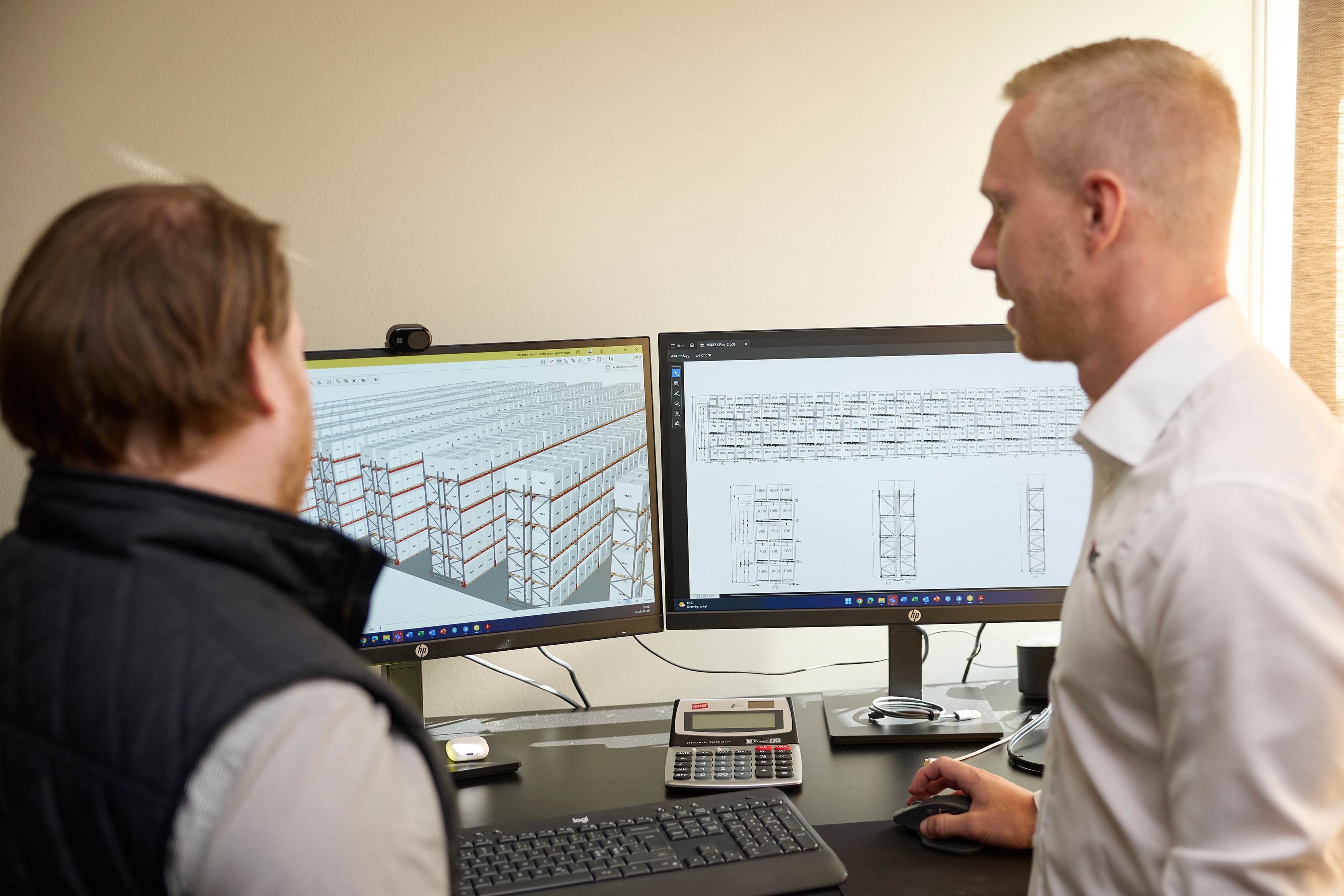
How does your warehouse actually work today? Or, if you are planning a new warehouse, how would you like it to work? How much do you handle? How do goods move through the warehouse? Where do delays, frustration or unnecessary work occur? Are there processes that are done a certain way simply because they always have been?
The aim is to understand how the warehouse is actually used, not just how it looks on a drawing.

2. Set clear goals
Once you understand the current situation, the next step is to define what you want to achieve. What do you actually need from a new storage solution?
Do you need more space? Better flow? Increased safety? A better working environment? Lower costs? Or a warehouse that can support future growth without having to be rebuilt?
3. Analyse the goods and the premises
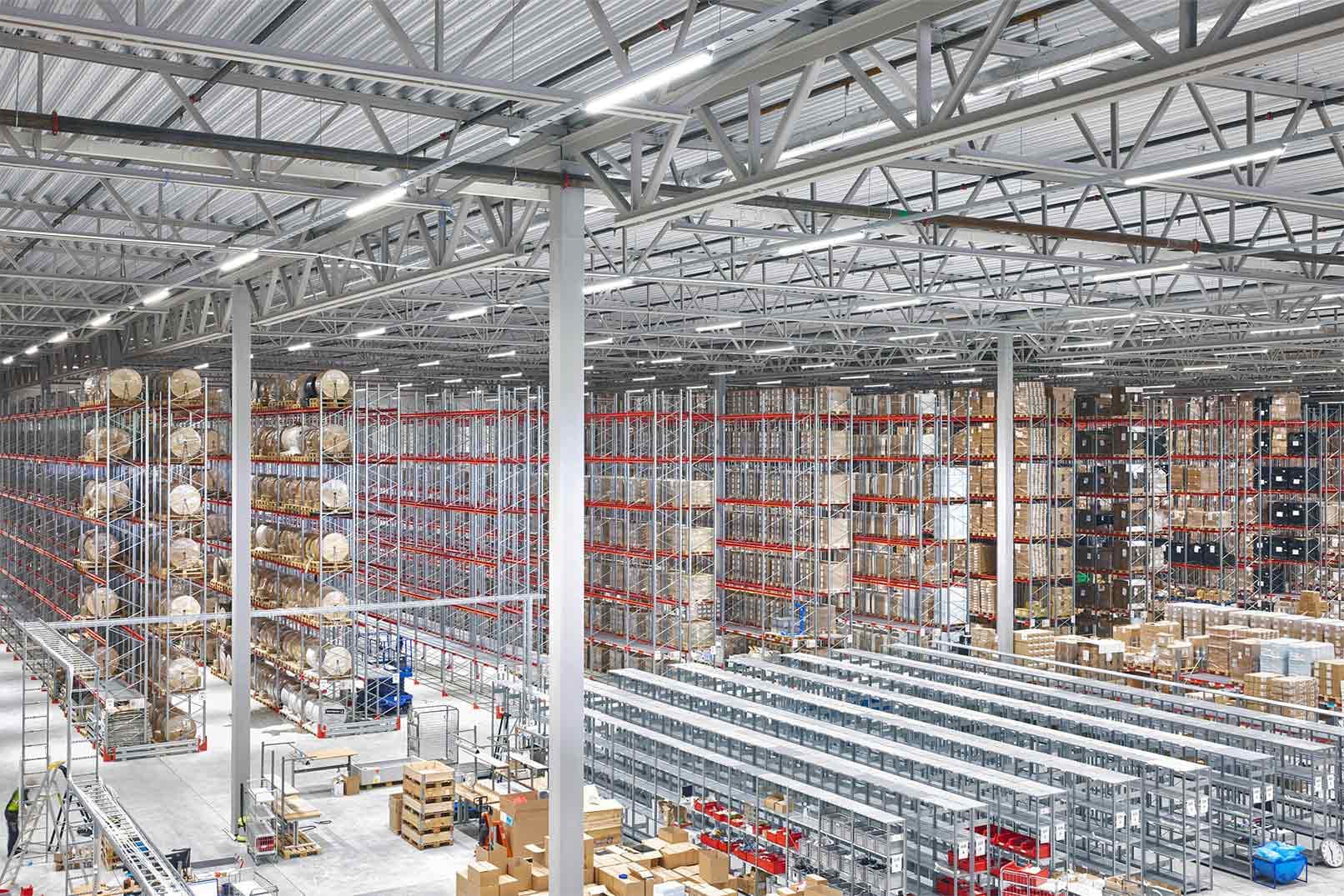
What are you storing, and what does the building allow for?
Different types of goods place different demands on the storage solution. Weight, dimensions, picking frequency and how goods are handled in everyday operations all influence which solution will work best.
At the same time, the premises set clear limits. Floor space, ceiling height, columns, doors and forklift aisles all determine what is possible.
4. Choose the right storage system
Only once you understand the current situation, your goals and the conditions of the premises can you determine which storage system is the right fit.
A good storage system should not only meet today’s needs. It should also continue to work as your operation changes over time.
5. Optimise flow and safety
Will the solution work in everyday operations, with people and forklifts moving through the warehouse?
Once the storage system has been selected, the next step is to make sure the whole solution works in practice. Inbound goods, picking and outbound goods need to flow without creating conflicts, unnecessary movement or safety risks.
This step is essential for verifying the solution before it is built.
6. Planning, implementation and follow-up
How do you make sure everything works as intended from start to finish?
Once the solution has been verified, detailed planning and implementation can begin. Timelines, costs and responsibilities all need to work together. Installation, commissioning and follow-up then complete the process.
This is where time and money can easily be lost if the details are not handled properly. Make sure you have allocated enough time, resources and clear internal responsibilities. And bring in expertise where needed.
A warehouse is never truly finished. Needs change, and the solution must be able to adapt and develop over time.