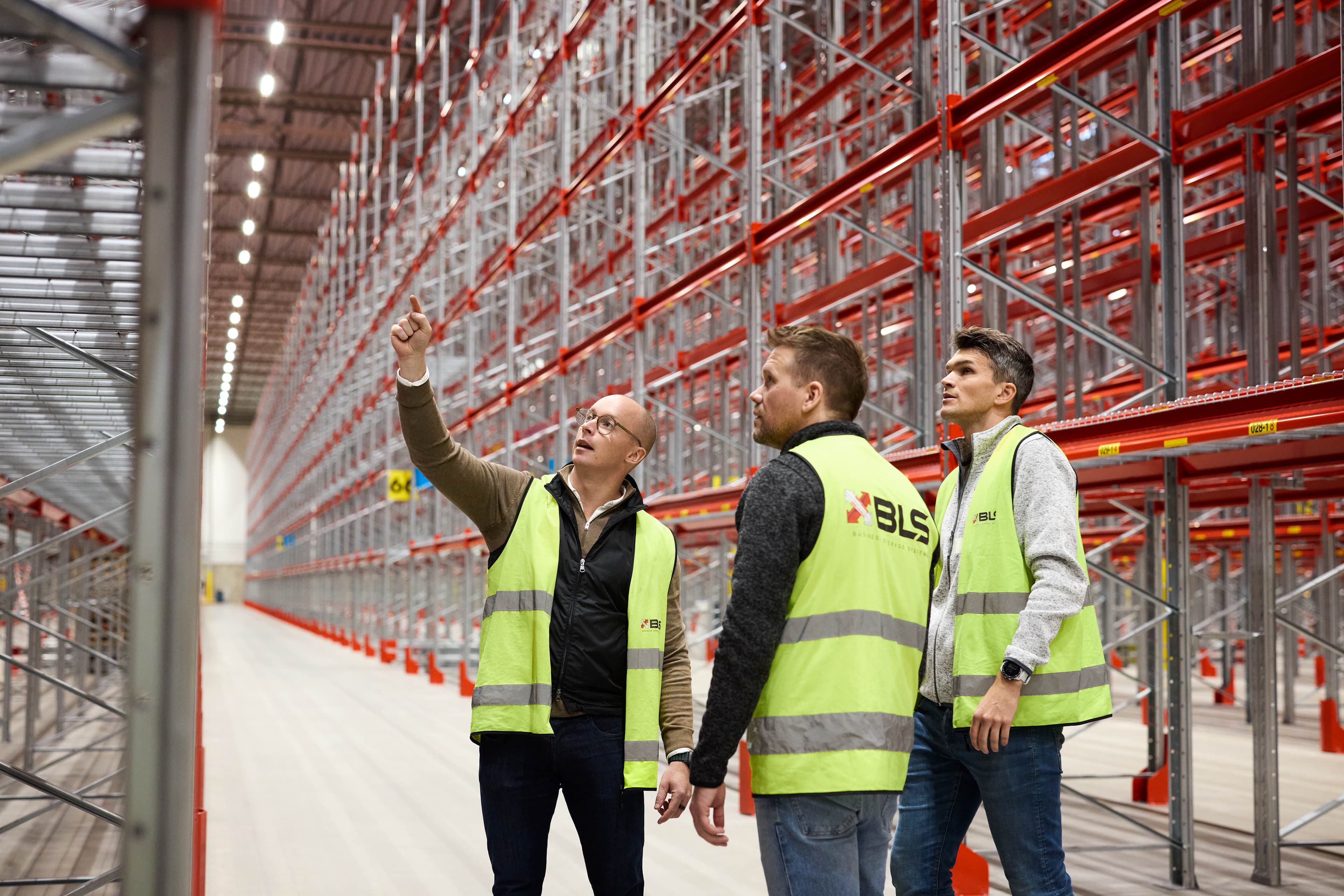
The 5 key requirements for your warehouse
Warehouse safety starts with the structure. Racking and storage systems must be correctly designed, installed and used according to clear requirements. When the right principles are followed from the start, you get a warehouse that is safe in daily operation and built for real-world loads. Here are five of the most important requirements for a safe warehouse installation.
1. Correct dimensioning
A storage system is a load-bearing structure and must be designed for the actual loads it will carry. Pallet weight, height and handling equipment all affect how the racking should be designed to meet requirements and operate safely in everyday use.
2. Secure anchoring
Racking must be installed and correctly anchored to the floor to ensure stability. Proper anchoring reduces the risk of movement in the structure and ensures that the storage system can withstand its loads and daily use.
3. Clear load signage
Load signs show the maximum load each section and level is designed to carry. Clear signage ensures that everyone in the warehouse knows how the system should be used and reduces the risk of overloading.
4. Designed for how the warehouse is used
Storage systems should be designed around how the warehouse actually operates. Pallet handling, picking and forklift traffic place different demands on the system. The right design creates both safer and more efficient handling.
5. Protection against impact
Forklift traffic creates a risk of collisions in the warehouse. Protection such as column guards and barriers helps protect the load-bearing parts of the racking and reduces the risk of structural damage.