Optimise your existing warehouse
A warehouse does not need to be rebuilt to perform better. There is often untapped capacity in the system you already have. By reviewing loads, layout and structure, you can improve flow, safety and the use of available storage space.
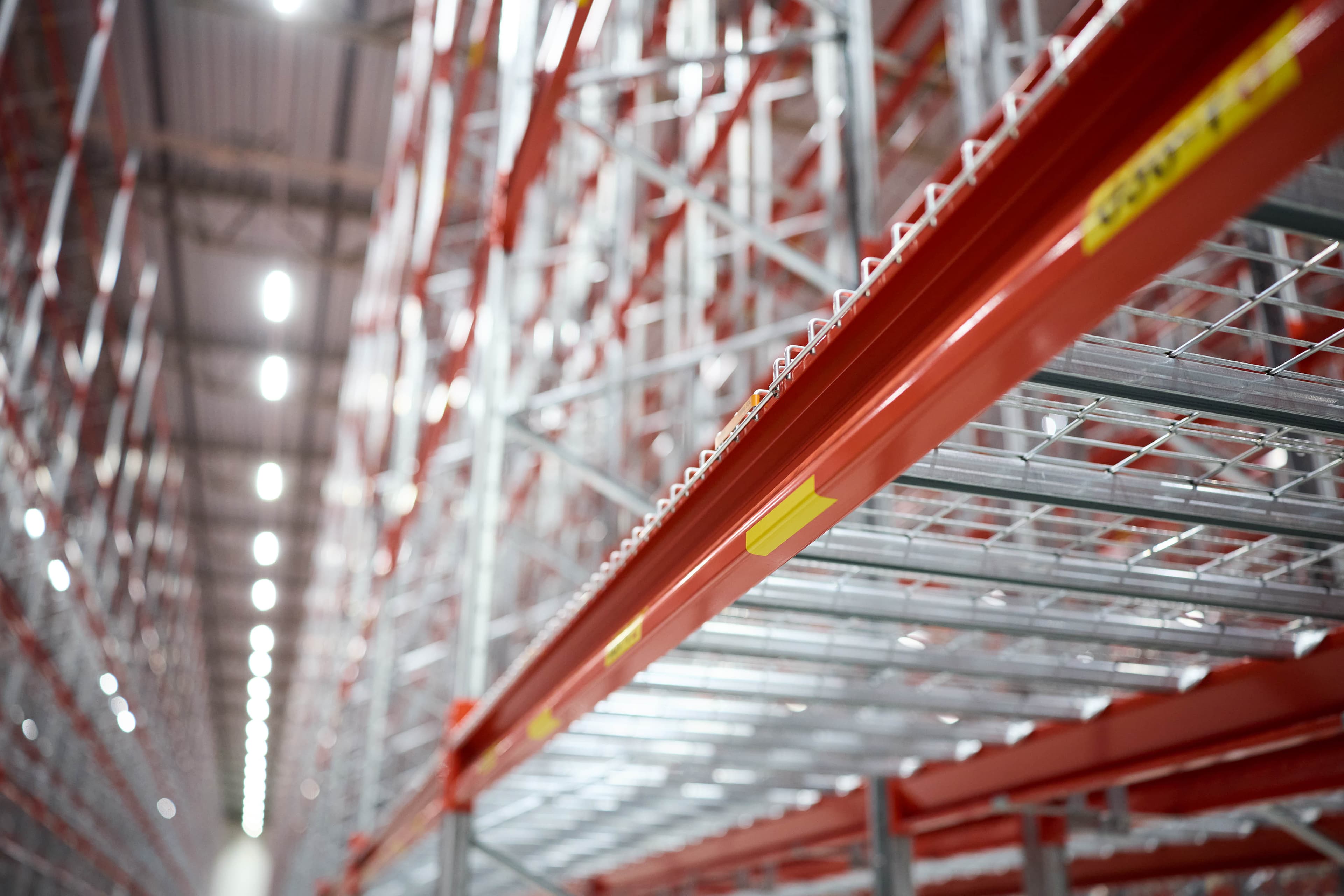
1. Review the loads
Make sure that racking and load levels are being used within their specified load limits. By reviewing pallet weights, load distribution and labelling, you can ensure that the storage system is being used as it was designed.
2. Adjust the layout
Small changes to aisles, picking zones and product placement can make a big difference. An improved layout can reduce unnecessary movement, create better flow and make daily operations more efficient.
3. Make use of the height
Many warehouses have unused capacity at height. By adding more levels or adjusting load beams, storage capacity can be increased without expanding the warehouse.
4. Reinforce where needed
Sometimes additions or reinforcements are required to meet changing needs. By upgrading components or adapting the structure, the warehouse can be prepared for new loads and requirements.
5. Create a clear structure
Clear labelling, well-defined zones and logical product placement make the warehouse easier to work in. A clear structure reduces picking errors, saves time and creates better organisation in daily operations.